
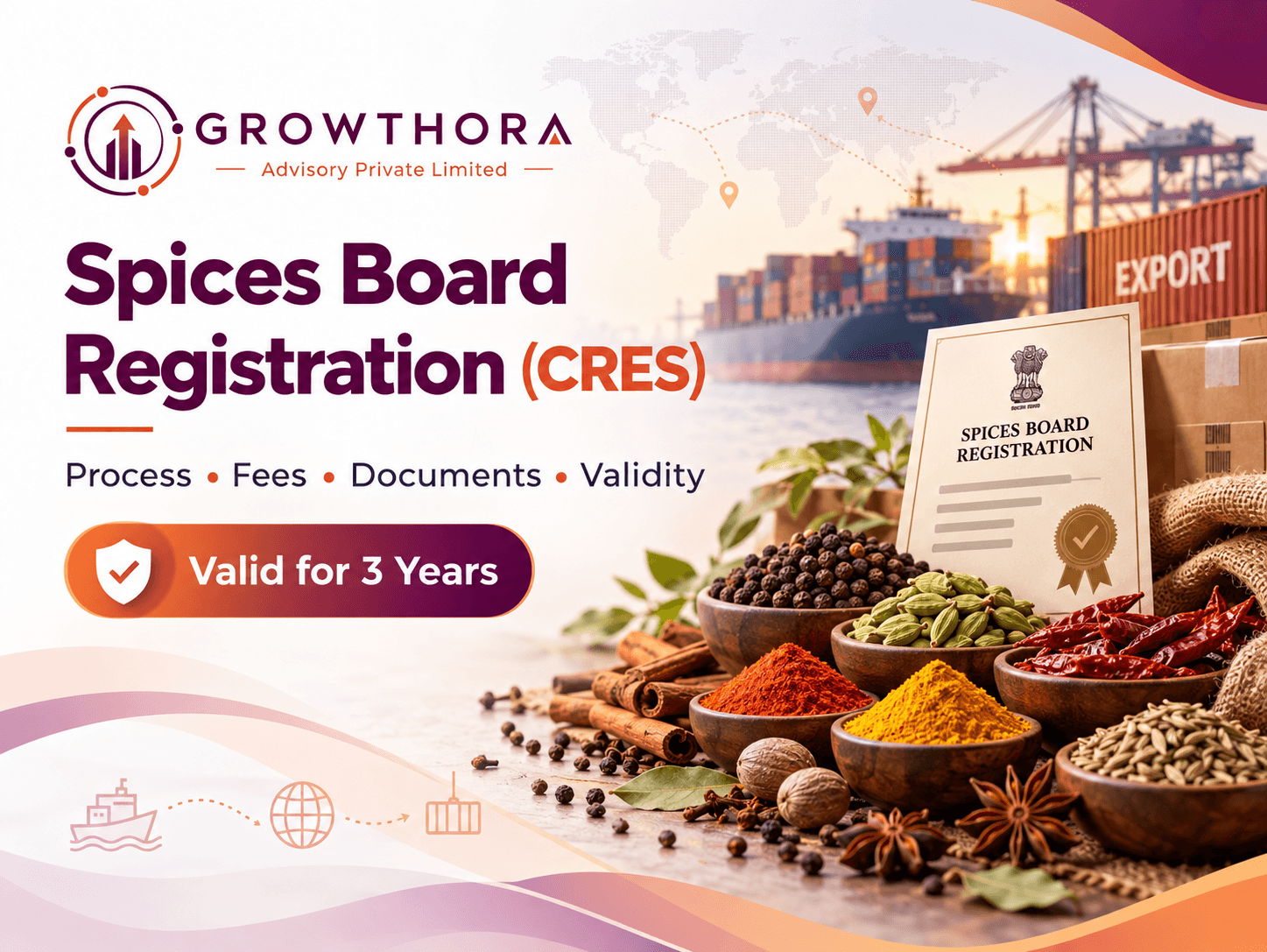
Why the Spices Board regulates spice exports
India is one of the world's largest producers and exporters of spices, and the Spices Board was set up under the Spices Board Act, 1986, to promote export, ensure quality, and maintain a register of exporters. Registration gives the Board visibility over who is exporting, what is being shipped, and whether the product meets the quality and food safety expectations of importing countries.
For an exporter, CRES is the legal permission to trade in notified spices. Without it, shipments of spices and spice products cannot be cleared for export even if the IEC, GST, and other registrations are in order.
Key Takeaways
- CRES stands for Certificate of Registration as Exporter of Spices and is issued by the Spices Board, a statutory body under the Ministry of Commerce and Industry.
- It is mandatory in addition to the Importer Exporter Code (IEC) issued by DGFT, so an exporter needs both before shipping notified spices.
- The certificate is valid for a block of three years and must be renewed before expiry; otherwise, a fresh application is needed.
- The Spices Board treats CRES as the Registration cum Membership Certificate for spice exports, so a separate RCMC from the Board is not required.
- Registered exporters must file quarterly returns in the prescribed form and complete pre-shipment sampling intimation for consignments.
- Fee amounts have been revised over the years, and published figures differ across sources, so always confirm the current registration fee on the Spices Board portal before paying.
Who needs a CRES?
- Merchant exporters who buy spices from the domestic market and export them
- Manufacturer exporters who process, grind, blend, or pack spices before export
- Grower exporters who cultivate spices and sell directly to overseas buyers
- Importers and exporters of spice products who deal in notified spices under the Spices Board Act
CRES versus IEC versus RCMC
| Registration | Issued by | Purpose |
|---|---|---|
| IEC (Importer Exporter Code) | Directorate General of Foreign Trade | Basic identity for any import or export business in India |
| CRES | Spices Board of India | Commodity specific licence to export spices and spice products, valid for three years |
| RCMC | Export Promotion Council or commodity board | Membership certificate for availing export benefits, and for spices the CRES is accepted in its place |
Documents usually required for CRES
- Importer Exporter Code (IEC) certificate, since CRES is issued against the IEC
- PAN card of the proprietor firm or company
- GST registration certificate, or a self-declaration where GST registration is not applicable
- Certificate of incorporation, partnership deed, or other proof of the legal entity
- Bank certificate or confidential report from the operating bank in the prescribed format
- Udyam or industry registration and a valid FSSAI or pollution control board certificate for manufacturer exporters
- Passport-size photographs and identity proof of the proprietor, partner, or authorized signatory
How to apply for Spices Board Registration online
- Obtain an Importer Exporter Code from DGFT, since the Board issues CRES against the IEC.
- Visit the Spices Board website, indianspices.com, and open the Exporter Registration (CRES) section.
- Register on the portal and fill in the online application with entity, IEC, tax and bank details.
- Upload the required documents and pay the registration fee through the payment gateway or as directed in the current circular.
- The application is reviewed by the concerned regional office of the Spices Board, which may seek clarifications.
- Once approved, log in to the portal to download the CRES certificate and note the registration number for shipping documents.
Fees, validity, and renewal
CRES is issued for a block period of three years. Exporters should apply for renewal before the validity ends, because a lapsed certificate means the exporter has to apply again as a new registrant. The Board has revised fees and procedures through circulars over time, and older guides quote figures such as ₹2,000 or ₹5,000 for fresh registration. Treat any figure outside the Board's current circular as indicative and verify the exact amount, including GST, on the official portal.
Changes in entity name, address, or constitution need to be reported, and a change of entity generally requires surrendering the old certificate and applying afresh in the new name.
Ongoing obligations after getting CRES
- File the periodic export returns in the format prescribed by the Spices Board.
- Complete pre-shipment sampling intimation for consignments as required by the Board.
- Keep the IEC, GST, and other registrations active and updated, since CRES depends on them.
- Maintain product quality and labeling in line with FSSAI and the importing country's standards.
Frequently Asked Questions
What is the full form of CRES?
CRES stands for Certificate of Registration as Exporter of Spices, issued by the Spices Board of India under the Spices Board Act, 1986.
Is Spices Board registration mandatory to export spices?
Yes, an exporter of spices or spice products needs a CRES from the Spices Board in addition to the Importer Exporter Code from DGFT.
How long is a CRES valid?
A CRES is issued for a block period of three years and must be renewed before expiry to avoid applying as a fresh registrant.
Do I need a separate RCMC if I hold a CRES?
No, the Spices Board CRES is treated as the Registration cum Membership Certificate for spice exports, so a separate RCMC is not required for spices.
Can I apply for CRES offline?
The application is filed online through the Spices Board portal, and any supporting hard copies are submitted to the regional office only if the current circular requires them.
What happens if I export spices without a CRES?
Shipments of notified spices cannot be cleared without a valid CRES, and exporting without registration can attract action under the Spices Board Act, 1986.
Planning to start a spice export business?
Getting the IEC, CRES, FSSAI, and GST registrations lined up in the right order saves weeks of delay. Book a free consultation with Growthora, and we will handle your Spices Board registration, renewal, and the related export compliance.
Next step
Apply this to your business.
Confirm whether this applies to your legal structure, industry classification, and credit history - in under 30 minutes with an advisor.